For modern cities, street lights are very important lighting facilities, and smart street light poles are an innovative composite product that can combine different information equipment technologies. In the construction of green smart cities, smart street light poles have become an important part. The author mainly explores the application of smart light poles in green smart cities, hoping to provide useful suggestions for promoting the construction of green smart cities.
In the construction of municipal infrastructure, street lamps are a very important part, and urban road network planning determines the comprehensiveness of street lamp coverage and the breadth of distribution. In the construction of smart cities, smart street light poles have also become a very important part. The author mainly analyzes the advantages of smart street light poles in the construction of green smart cities, hoping to promote the construction of smart cities through the construction of smart street light poles, better save energy, and develop good green smart cities.
First, the importance of smart street light poles in the construction of green smart cities
1, can integrate a variety of functions together, to lay the foundation for the construction of green smart city
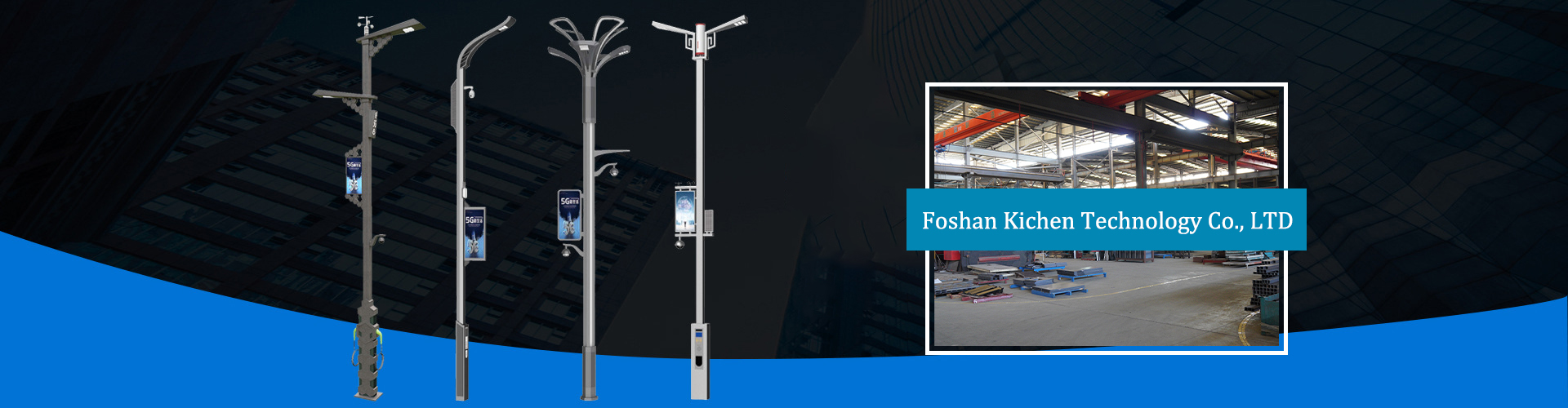
The smart light pole can integrate wireless WIFI, lamp holder, surveillance camera, single light controller, LED display, emergency broadcast, micro-base station, emergency call, RFID linkage, and also includes a number of sensors including wind speed and direction, air quality, water level and noise, which can quickly transmit information, intelligent perception and remote control. The light pole will become an important place for urban beautification, green development of urban energy saving and consumption reduction and smart city information collection, so as to lay the foundation for better construction of green smart cities.
2. Intelligent management of the city through advanced technology
When laying the street light strong current network, the laying of a series of wireless transmission equipment such as micro-base stations and optical fiber and NB-IOT can form a relatively extensive data acquisition and two-way communication Internet of Things. Through cloud computing, cloud storage, and big data technologies, the compatible and open big data management platform for smart city basic iot hardware and software is constructed, and the city center is constructed.
The use of smart lampposts can well sort out, organize and analyze a large amount of data in the city, so as to accurately do a good job in the management of various fields of the city, achieve resource intensive management, and strive to help the city reduce its energy consumption, reduce environmental pollution, eliminate security risks, and effectively improve the comprehensive competitiveness of the city itself. So that the city management more intelligent and scientific.
3. Innovate business models and develop urban economy
The government can innovate the business model according to the actual situation and needs, and hand over the franchise rights of smart street lights including street lights to social capital, so as to form a diversified investment and financing system with the government as the leader and enterprises as the main social input as the channel, so as to build an Internet of Things platform with excellent profitability. Turn idle assets with relatively single functions into high-quality assets that can be operated sustainably, build smart industries, and help urban economy develop better.
4, avoid the appearance of repetitive construction, help the city to reduce its construction costs
For the urban Internet of Things, the smart street light pole is a very important perception carrier, which can quickly perceive, carry out information transmission, and carry out remote control to avoid the repetition of the construction of the smart city basic sensor network. At the same time, it can also reduce the cost of sensor data acquisition of urban iot terminals, saving a lot of data communication costs and operation and maintenance costs.
Therefore, in the future of urban construction, smart street light poles can become a very high-quality site in the urban area, which can provide better help for the functional application of different parts of the city, help the city shorten the time of its green smart city construction, reduce the construction cost, and carry out the construction of a unified city sharing and communication platform, which is also the most effective means to build a green smart city.
2. Intelligent design of urban system architecture
For smart city, its core is to use modern technology to connect urban people and people, things and things, people and things together with functional means, so that the city's goal direction is more clear, improve the actual efficiency of urban operation, so that urban information infrastructure and urban infrastructure can be more perfect together, so as to improve the scientific nature of urban decision-making. Under normal circumstances, when carrying out the smart city smart road light pole system architecture, it can be divided into the following four levels.
1. Perceptual layer
The perception layer refers to the rapid perception and detection through the information network, and the use of the network covered in the city to do a good job in the supervision of various departments of the city to ensure that the information obtained can be more transparent and complete. Smart lampposts can collect relevant information through a series of advanced equipment such as wireless network, wired network, charging pile and video broadcast, so as to better collect information in the city, integrate various resources on this basis, so as to better share and coordinate related resources, which can help the city reduce its construction cost and improve the efficiency of urban operation and maintenance. So as to promote the construction of smart cities. The intensive sharing and comprehensive coverage of the city perception network based on the smart street light pole can provide comprehensive information for various system applications in the city.
2. Network layer
The network layer includes a series of networks such as the city's Internet, Internet of Things and communication network, which can not only collect information, but also ensure the security of information. The communication network construction is carried out through the intelligent light pole pipeline and the main body, which includes some wireless and effective networks such as micro-base stations, optical fiber networks and WIFI devices.
It can provide a better information application environment for the construction of smart cities, and ensure that all kinds of information can better cooperate inside and outside the city. The combination of computer technology, modern communication technology and high and new technology can realize the wireless, optical, intelligent and integrated information development. It can provide business network and communication services for the construction of green smart cities, so as to better meet the actual needs of smart city construction for various information and communication services.
3. Platform layer
The platform layer contains a variety of data center and application support platforms. When the data is collected, it is mainly through a series of induction devices such as smart street light poles, and in the case of collection, the information is processed well. With the smart city cloud computing data center as the foundation and the data exchange platform as the core, the construction of a unified information resource management system, public application support platform, key information resource database, data exchange platform and information resource catalog database can be carried out to lay a better foundation for the intensive construction of urban information. Ensure that the infrastructure in the city can make good use of IT technology, so that the city can better share relevant information, and then integrate relevant information through the integration layer, to ensure the effectiveness of information collection, but also to ensure the security of the information itself.
4. Application layer
Application layer refers to the management and application of a series of things such as smart home and smart government. This level is not only for scientific research institutions, but also for government management departments and public groups. Scientific research institutions need to collect and study relevant data according to the actual situation and needs, and predict the research results, so as to provide data support for the government to make better decisions. Government authorities need to do a good job of traffic safety, infrastructure management, and policies to ensure that decisions are more stable, and if problems arise, they can be monitored and managed in a timely manner.
In relatively special times, the use of smart lampposts, government management departments can also issue emergency notices or emergency broadcasts, can evacuate dangerous accidents in time, and minimize the harm of dangerous accidents. When facing ordinary citizens, it can use smart street light poles to publish information, provide people with road condition information, weather conditions and other information, and also charge electric vehicles.

 Position: